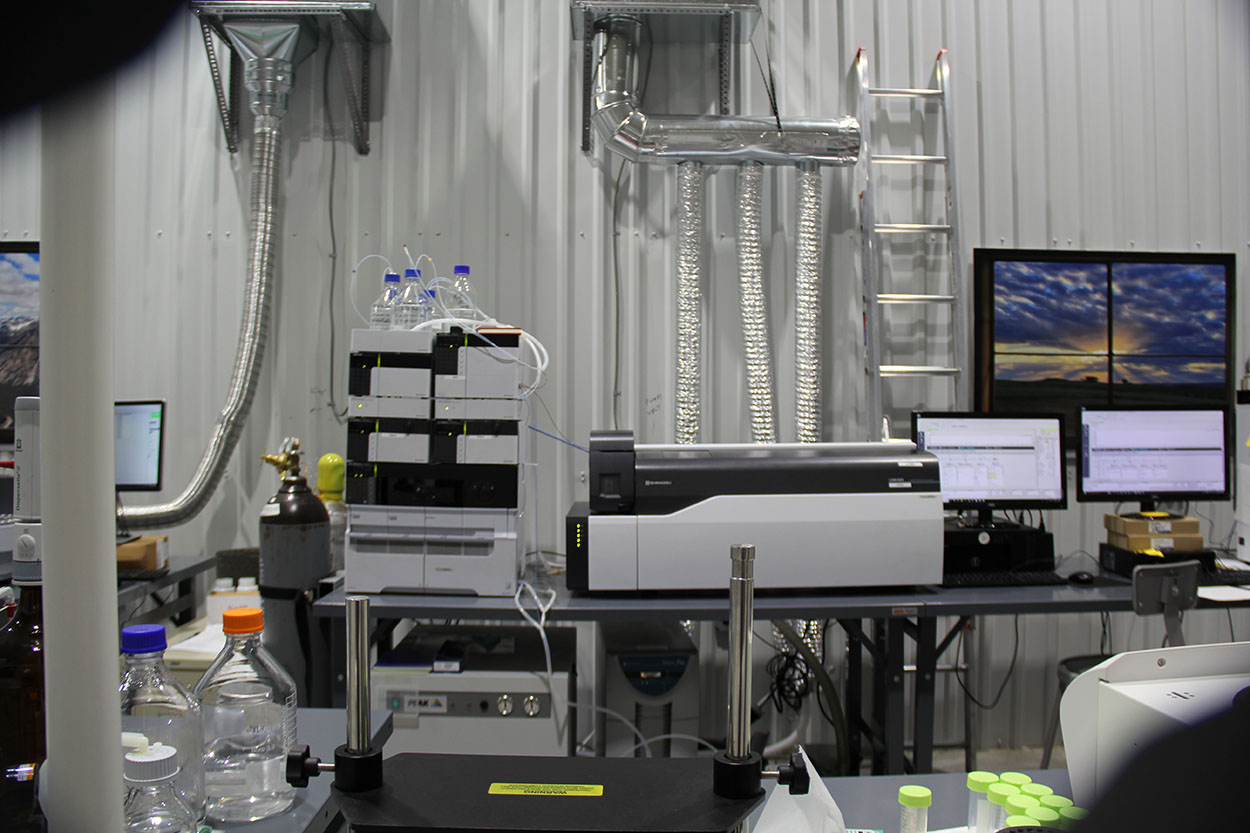
Say hello to the ones running the show and ensuring that your samples are processed in a timely manner and all products are safe for everyday consumption.

Our Montana Scientific Directors bring more than a decade of hands-on experience in testing and are proficient across all laboratory methods.

Dr. Byron Bennett, PhD, is an organic chemist with extensive experience in analytical chemistry within regulated laboratory environments. His work includes pesticide and herbicide analysis using HPLC, volatile organic analysis via GC/FID/ECD, and per- and polyfluoroalkyl substances (PFAS) analysis using HPLC-MS/MS—skills directly applicable to cannabis safety, compliance, and quality testing.  Dr. Bennett earned his Ph.D. in Chemistry from the University of Wyoming and has a strong operational background in laboratory administration, chemical inventory management, hazardous waste handling, and personnel training. His combination of analytical expertise and academic leadership supports reliable, high-quality laboratory operations and method development.

Dr. Matthew Sarnowski, PhD, is a synthetic organic chemist with over 11 years of experience in complex compound synthesis, purification, and analytical characterization. His background includes extensive work with air- and moisture-sensitive reactions, mass spectrometry, and preparative RP-HPLC—skills directly applicable to high-precision cannabis and cannabinoid analysis.  Trained in organic chemistry at the University of Notre Dame, Dr. Sarnowski brings a rigorous, research-driven approach to laboratory operations, method development, and quality-focused analytical workflows supporting cannabis testing and product innovation.  Originally from Huntsville, Alabama, and having lived and worked across diverse regions of the U.S., Dr. Sarnowski values environments that balance scientific rigor with an appreciation for the outdoors—an outlook that aligns well with collaborative, hands-on research cultures.


Reasons to choose us

1. Experience

2. Equipment

3. Reliability

4. Stability

5. Support